
Every quality deadbolt carries a grade, and that single number tells you more about real-world security than any sticker about “maximum protection.” Once you understand what the grades measure, picking the right lock for each door gets simple.
What the grades actually measure
The grading system comes from standardized cycle and strength testing. Grade 1 is the highest residential and light-commercial rating, built to survive the most operating cycles and the hardest strikes. Grade 2 is a solid mid-tier choice for most homes. Grade 3 meets the basic residential minimum and is fine for low-risk interior or secondary applications. The numbers are not marketing — they reflect how many times the lock was thrown, how much force the bolt resisted, and how the finish held up.
Which grade belongs on which door
For an exterior entry door in Houston, we steer homeowners to Grade 1 or a strong Grade 2 deadbolt. The front and back doors are what an intruder tests first, and the extra bolt strength and pick resistance are worth it. Interior or garage-to-house doors can usually run a Grade 2. Save Grade 3 for closets, sheds, or anywhere the lock is about privacy rather than stopping a forced entry.
Hardware choices like this are part of a broader habit of not cutting corners on the house. Owners who insist on graded, certified locks tend to apply the same standard everywhere — keeping local plumbing repair services and drain and water-line repair on call rather than waiting for a small problem to become a flood.
The grade is only half the job
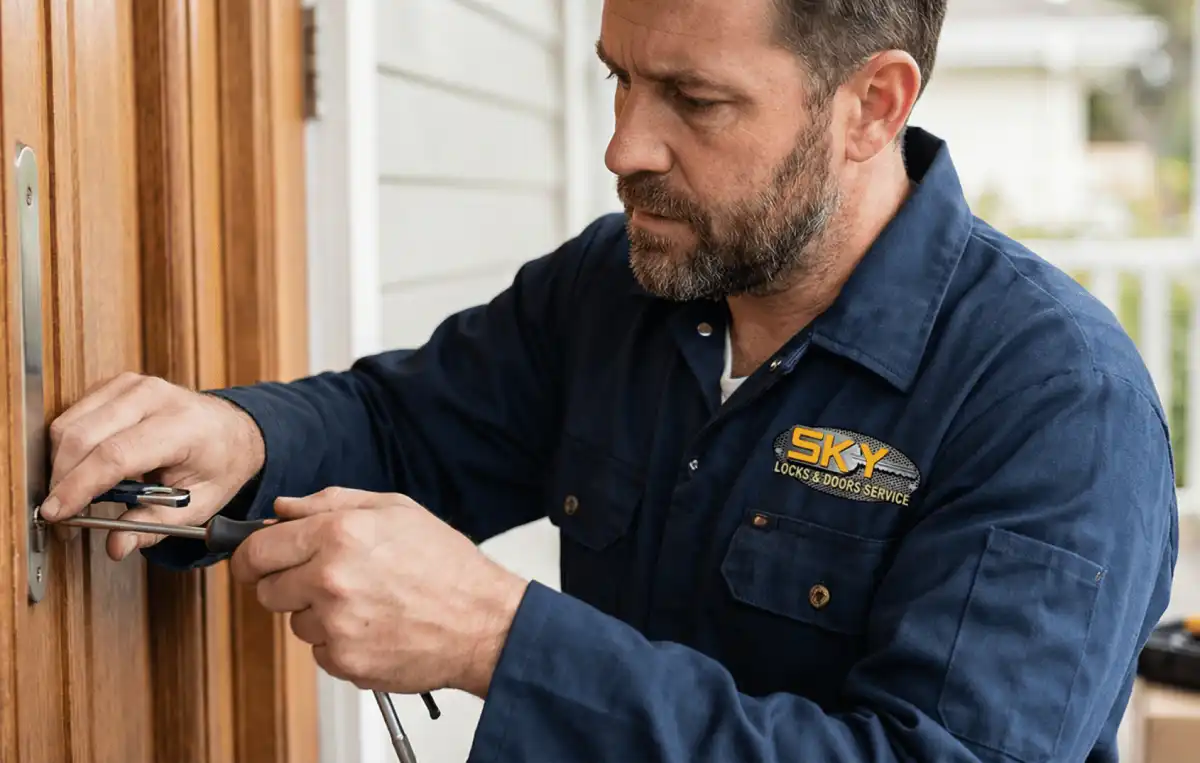
A Grade 1 deadbolt screwed into a flimsy strike plate with short screws is not a Grade 1 installation. We reinforce the strike with three-inch screws into the framing, check the bolt throw, and confirm the door and jamb can take the load. The Builders Hardware Manufacturers Association publishes the certification standards behind these grades, and the CPSC consumer safety guides reinforce why proper installation matters as much as the rating on the box.
Single-cylinder versus double-cylinder deadbolts
Grade is not the only deadbolt decision. A single-cylinder deadbolt uses a key outside and a thumbturn inside, while a double-cylinder model needs a key on both sides. Double-cylinder locks are sometimes chosen for doors with glass nearby, so an intruder cannot break the glass and reach the thumbturn, but they carry a real safety tradeoff: in a fire or emergency, anyone inside needs a key to get out. We walk Houston homeowners through that tradeoff carefully, because egress safety usually outweighs the marginal security gain, and local code and insurers may have opinions too.
How the bolt and strike resist a real kick
Most forced entries are not sophisticated — they are a hard kick near the lock. That is why the grade of the deadbolt only tells part of the story. A one-inch bolt throw, a reinforced strike plate, and three-inch screws driven deep into the wall framing are what actually keep the door in its frame under impact. We routinely upgrade the strike and screws when installing a quality deadbolt, because pairing a strong lock with a weak strike is like buying a vault door for a cardboard wall. The frame and the lock have to work as a system.
Finish, longevity, and the Houston climate
The grade testing behind a deadbolt also covers finish durability, which matters more than it sounds on a Gulf Coast front door. Salt air, humidity, and intense sun can pit and corrode cheap hardware within a season or two, leaving you with a lock that sticks and a key that drags. Choosing a quality finish rated for exterior use keeps the lock operating smoothly and looking right for years. When we install a graded deadbolt, we are not just buying security for today — we are buying a lock that still throws cleanly after a decade of Houston weather.
When a hardware-store deadbolt falls short
A graded deadbolt off the shelf is only as good as its installation, and that is where many do-it-yourself jobs quietly fail. The lock might be a quality Grade 1, but if the bore is slightly off, the bolt does not fully extend, the strike is misaligned, or the screws only reach the door jamb instead of the wall framing, the rated strength never materializes. We see homeowners who paid for premium hardware getting builder-grade security because of a rushed install. Having a locksmith mount and adjust the lock means the grade on the box is actually the grade on your door, with the bolt seating fully and the frame reinforced to match.
Your Houston Deadbolt Specialists
At Sky Lock and Doors, we install and upgrade graded deadbolts across Houston, Sugar Land, Katy, The Woodlands, Pearland, Pasadena, Spring, Cypress, Humble, Kingwood, Friendswood, and the surrounding Greater Houston communities. Contact us to match the right grade to each door, and explore our doorknob and deadbolt installation services for a properly reinforced setup.