
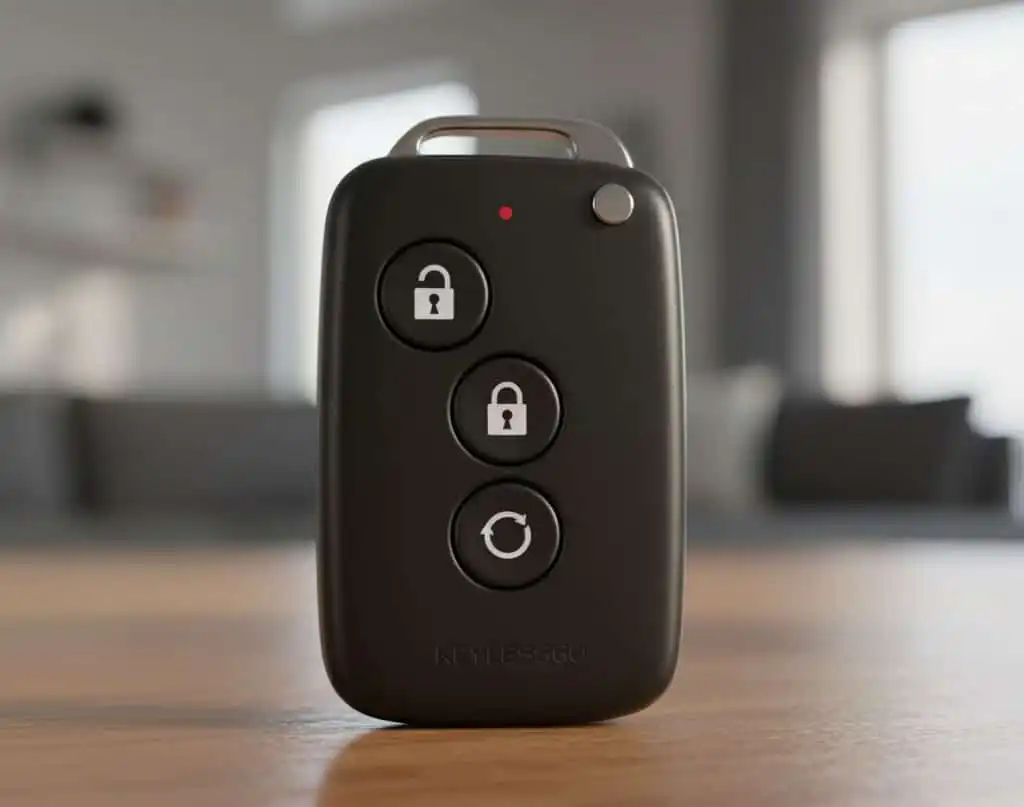
If your car key has a plastic head and the dashboard shows a little key or security light, you almost certainly have a transponder key. The chip inside is the reason a copy cut at the hardware store turns in the ignition but will not start the engine. Understanding how it works explains why programming is a separate, necessary step.
What the chip actually does
A transponder key carries a tiny microchip with no battery. When you turn the key, a coil around the ignition energizes the chip, which sends back a unique code. The car immobilizer checks that code against what it expects and only then allows the engine to start. Cut a key without programming the chip and the mechanical part works while the immobilizer keeps the car locked down — that is anti-theft by design.
The programming process
Programming pairs a new key chip with your vehicle immobilizer. Depending on the make and model, that may use onboard procedures or dedicated locksmith equipment that communicates with the car computer. We confirm the right blank and chip for your vehicle, cut the mechanical bitting, and program the transponder so the new key both turns and starts. Most jobs are quick, but some makes have security delays built in to deter theft.
Drivers who plan ahead with a spare key are the same people who do not wait for things to break around the house. For related needs, we recommend heating and cooling specialists.
Why this is anti-theft that works
The transponder system is one reason car theft by simple key copying largely ended. The encrypted handshake is hard to forge, which is why proper programming matters. The NIST research on secure authentication and the CISA guidance on protecting connected systems describe the same principles that keep your immobilizer honest. A correctly programmed key is the only key that should ever start your car.
Cloning versus programming a transponder
There are two ways to make a working transponder key, and they are not the same. Cloning copies the existing chip onto a new key, so the car sees an identical signal and no vehicle programming is needed — fast and convenient when you have a working key to copy. Programming registers a brand-new chip into the car immobilizer as an additional authorized key, which is what all-keys-lost situations and many modern vehicles require. We choose the right method for your make, model, and situation, because the wrong approach either will not work or will not give you a true, independently registered spare.
Why some keys take longer to program
Not all vehicles program in the same few minutes. Some manufacturers build in security delays — waiting periods of several minutes to much longer — specifically to frustrate thieves attempting to add a key quickly. Others require more involved procedures to access the immobilizer, especially when no working key remains. None of this means anything is wrong; it is the anti-theft system doing its job. We tell you upfront if your vehicle is one of the slower ones so you can plan the appointment, and the wait is still almost always shorter and cheaper than the dealership route.
Chipped keys and older vehicles
Transponder technology became common in the late 1990s, so a wide range of vehicles on Houston roads use some form of chipped key, each with its own quirks. Older systems may use simpler fixed-code chips, while newer ones use rolling encrypted codes that are far harder to defeat. The right blank, chip, and procedure vary accordingly. An automotive locksmith who works across makes and model years brings the equipment and the know-how to handle both the fifteen-year-old sedan and the current model, where a general hardware store simply cannot.
The value of a programmed spare
The cheapest day to make a transponder spare is any day before you need one. Cutting and programming an extra key while you still have a working one is straightforward and inexpensive compared with an all-keys-lost recovery. A spare stored safely at home means a lost or damaged key is a minor errand rather than a vehicle you cannot start. We routinely encourage drivers to make the spare during a service visit, because the small cost now prevents a much larger, more stressful expense later.
Your Houston Transponder Key Specialists
At Sky Lock and Doors, we cut and program transponder keys across Houston, Sugar Land, Katy, The Woodlands, Pearland, Pasadena, Spring, Cypress, Humble, Kingwood, Friendswood, and the surrounding Greater Houston communities. Contact us for a programmed spare, and see our transponder key programming services for fast, on-site help.